Jitsu 2.14 is now public: Kubernetes-native for production self-hosting
Jitsu 2.14 makes production self-hosting Kubernetes-native: functions, Profile Builder v2, and connector syncs now run as managed Kubernetes workloads. Our first stable public release in nearly a year, with MCP support, audit logs, and a Helm-based setup.

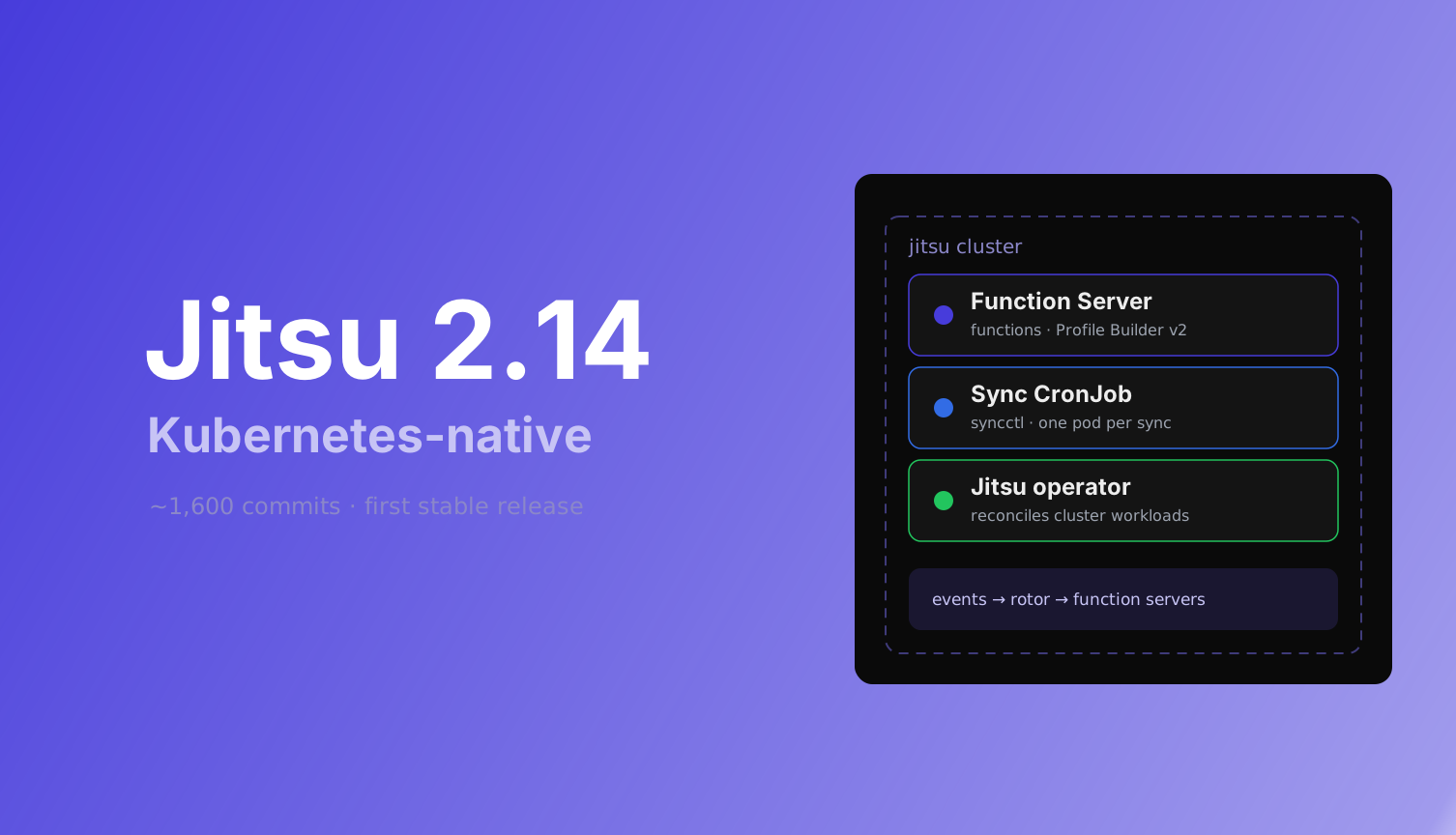
Jitsu 2.14 makes production self-hosting Kubernetes-native
Functions, Profile Builder v2, and connector syncs now run as managed Kubernetes workloads — giving self-hosted teams a cleaner path to autoscaling, isolation, sharding, and cloud-portable operations.
It's our first stable public release in nearly a year, and it's a big one — roughly 1,600 commits. Most of that work went into making Jitsu more reliable, easier to operate, and ready for larger self-hosted deployments. The headline is the architecture: the pieces that used to run inside a single process are now first-class workloads you can scale independently.
What "Kubernetes-native" means here
In the old runtime, functions, profile builders, and connector syncs were background pieces sharing one process. In 2.14 each becomes its own managed workload, using a few new building blocks:
- Function Servers — dedicated pods that run your user Functions (the JavaScript that filters, reshapes, and routes each event) and Profile Builder v2 (Jitsu's engine for rolling a user's events up into a single profile). Splitting them out is what makes autoscaling, workload isolation, sharding, and separate execution classes possible.
- The Jitsu operator — a Kubernetes operator that creates and reconciles those workloads for each deployment, so you don't hand-manage the underlying resources.
syncctl— the controller that schedules connector syncs. It now reconciles scheduled syncs directly into the cluster as Kubernetes CronJobs, with each sync running as its own pod. That replaces the previous Google Cloud Scheduler dependency and makes self-hosting far more portable.
The net result: scaling functions, syncs, and event processing no longer ties core behavior to one cloud provider or one process.
Upgrading? Read this first
If you self-host Jitsu, a few things changed that you need to plan for. Read the release notes and the self-hosting docs before you upgrade.
- Kubernetes is now required for feature-complete production self-hosting — specifically, for deployments that use functions, profile builders, and connector syncs. Smaller or exploratory setups still have lighter options (see below).
- Deploy the operator before upgrading rotor — event delivery now depends on function-server routing, so the operator has to be in place first.
- Docker Compose is deprecated for full production use. It still exists for exploration and development, but the recommended development setup is now the Helm chart — and 2.14 ships development Helm charts that run the full architecture locally.
- Google Cloud Scheduler support has been removed (replaced by Kubernetes CronJobs).
- Some console defaults changed: host-only auth cookies by default, a new maintenance mode replacing the old read-only flag, default API rate limiting, stricter config validation, and a lower default ingest payload size.
What else is new
Alongside the architecture work, 2.14 lands a long list of product and developer-facing features:
- MCP server support in Jitsu Console — connect an AI agent directly to your workspace (see Jitsu now speaks MCP).
- OpenAPI spec and a built-in API reference.
- User API tokens with names, types, and expiration dates.
- SOC 2-oriented audit logs.
- Maintenance mode for safe operational windows.
- Dead-letter queue and event reprocessing.
- Better sync and connection notifications.
- Redesigned signup flow.
- Segment-style
sentAtclock-skew correction. - ClickHouse TTL-based events-log retention.
More and better integrations
We also added and improved a range of integrations:
- Destinations: Resend, SendGrid, Statsig, DuckDB / MotherDuck, Xero.
- Warehouse auth: Snowflake key-pair auth, Postgres Private Service Connect auth, and Redshift IAM role improvements.
- Syncs: Firebase subcollection syncs.
Get started
2.14 is a big step toward running Jitsu seriously in your own infrastructure — a cleaner foundation for scaling event processing without a hard dependency on any single cloud.
- Upgrading an existing deployment? Start with the self-hosting guide, which now walks through the Helm chart.
- Trying it for the first time? The development Helm chart spins up the full architecture locally — no Kubernetes cluster of your own required.
- Want the full changelog? Read the 2.14.0 release notes on GitHub.
- Questions or hit a snag? Open an issue on github.com/jitsucom/jitsu — we read every one.
Upgrade to Jitsu 2.14 — read the self-hosting docs first
<script
 async
 src="https://data.yourcompany.com/p.js">
</script>--get signup page views in the last day
select * from events where
context_page_path = '/signup' and
timestamp > now() - interval '1 day'